Stay up to date with what’s next for higher ed with Jeff’s newsletter
A twice-monthly newsletter with more than 145,000 subscribers, featuring Jeff’s unique blend of storytelling and provocative insights on higher ed.
☀️ Good Morning! Thanks for reading Next. If someone forwarded this to you, get your own copy by signing up for free here.
🦃 It seems everyone is time-pressed getting ready for Thanksgiving next week (including me!), so I hope you appreciate this abbreviated version of Next to catch up on some recent higher ed developments.
EVENTS
🗽 A reminder for those in the New York City area... I'll be winding down the fall leg of the Dream School book tour at the iconic 92nd Street Y in a conversation with my friend, David Muir, anchor of ABC News World News Tonight. Tickets for the discussion on Monday, December 1 are nearly sold out, so be sure to get yours today.
🖥️ Join me for the final Next Office Hour of 2025, a timely conversation about how colleges can grow their enrollment by aligning programs to what learners are looking for.
We have a great panel lined up for this webinar, Wednesday, December 3, at 2 p.m. ET/11 a.m. PT, including:
👉 To join live or get a recording afterward, register for free. (Support from Risepoint).
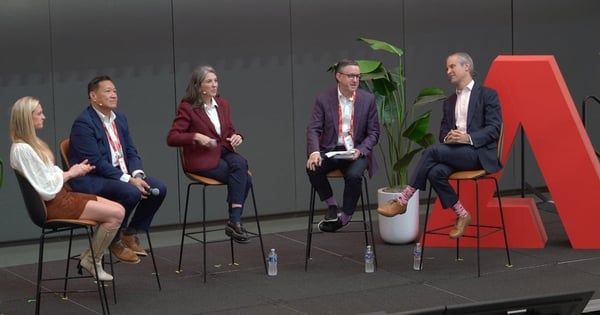
Caption: A live recording of the Future U. podcast last month at Adobe's headquarters in San Jose.
With the latest jobs numbers out this morning, attention will turn to the anemic employment market for recent college grads, how much AI is to blame, and what higher ed can do to help students.
What’s happening: At a live recording of the Future U. podcast at Adobe’s EduMAX conference last month in San Jose, Michael Horn and I dug into how AI is reshaping the job market for college graduates.
What this means: Over the last decade, teenagers have largely flocked to what they saw as career-specific majors in STEM and business.
Yes, but: The upheaval in the early career job market has caught higher education flat-footed.
Faculty adoption is lagging. Sparrow noted that even now 60% to 70% of faculty in many places aren’t using generative AI in their own work, while students already are.
Bottom line: AI isn’t the threat to colleges, staying stuck in their current mindset about AI is. Colleges that redesign curriculum around giving students agency, applied learning, and human skills will graduate students who succeed in an AI-driven labor market. The shift now in higher ed needs to be from protecting students from AI to preparing creators who can steer it.
🎧 Listen to the episode here or wherever you get your podcasts (and subscribe and rate us while you’re there).
📺 Watch the episode recorded live from Adobe’s headquarters on our YouTube channel.
SUPPLEMENTS
🎓 College Enrollment Climbs, But Computer Science Takes a Hit. Preliminary data from the National Student Clearinghouse Research Center shows total enrollment in higher ed rising 2% this fall, with undergraduates driving most of the gains. Community colleges posted the biggest jump (+4%). Certificate programs continue to surge (+6.6%), while master’s degrees are the only credential slipping (-0.6%). Enrollment among Hispanic, Black, and multiracial students continues to climb, even as White undergraduate enrollment fell 3.7%. The standout reversal is in computer science, which dropped 7.7% this fall and is down 5.3% since 2023, a rare pullback in a field colleges once banked on for nonstop growth. (National Student Clearinghouse Research Center)
🌎 New International Student Enrollments Plummeted This Fall. Efforts by the Trump administration to cut the number of international students on American college campus seem to be working: first-time enrollments fell by 17% this fall, according to data published this week by the Institute of International Education. But the drop-off can’t only be blamed on the administration’s policies because last fall also saw a decrease of 7%, the report found. Even with the decline in new students, the overall number of international students has remained relatively steady thanks to a huge post-Covid bump. (Latitudes)
📉 Education Department Shrinks Even Further. The Education Department signed six interagency agreements this week that will move a wide swath of higher-ed programs to other federal offices as part of a broader plan to dismantle the agency’s bureaucracy. Most higher-education grants are headed to the Labor Department, while language-education programs shift to State, and tribal-college programs move to Interior. The Department will still set budgets and priorities, but the receiving agencies will run day-to-day administration. The restructuring follows two rounds of layoffs and comes amid Trump’s order to shrink the Department “to the maximum extent permitted by law.” (Inside Higher Ed).
As we head into Thanksgiving, I’m thankful for your support of this newsletter. If you like this newsletter and my books and want to support me, there are a few ways you can:
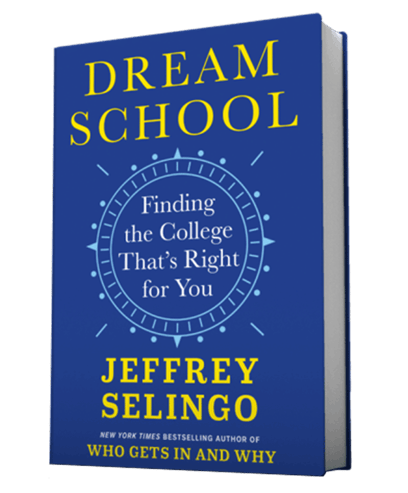
📚 Buy or gift a copy of Dream School.
✍️ Leave a short review about Dream School on Amazon or Goodreads—it really helps.
⏩ Forward the newsletter to a friend with an invitation to subscribe.
📧 Click reply and say hello.
👀 Follow me on LinkedIn, Instagram, Facebook, and Threads.
📢 Ask me to speak to your company, organization, or school (either in person or virtual).
Until next time, Cheers — Jeff

A twice-monthly newsletter with more than 145,000 subscribers, featuring Jeff’s unique blend of storytelling and provocative insights on higher ed.
Finding the college that’s right for you
Dream School is a must-have playbook for families coping with a more stressful era of college admission that gives them a roadmap for finding a good college where their teen can thrive, learn, and become the person they’re meant to be.